Peshawar: The City of Flowers
Perched along an ancient caravan route, it earned the title “Crossroads of Asia,” where journeys from Turkestan, Persia, Arabia, Afghanistan, China, and India converged. Known as the “Melting Pot of Civilisations” and even the “Casablanca of the East,” Peshawar has long been a city of romance and intrigue, where centuries of trade, art, and tradition meet. This timeless allure, blending the rich legacies of empires and cultures, makes it a true gateway to Asia’s heart and spirit.
An important archaeological dig in the Old City at Gor Khatri has established that Peshawar is one of the earliest living cities in this part of Asia, inhabited continuously from the 4-6th century BC, when it was a province of the Persian Achaemenian Empire. From then onwards it was ruled in turn by the Mauryans, Greeks, Scythians, Kushans, Sasanians, White Huns, Hindu Shahis, Ghaznavids, Ghorids, Suri Afghans, Mughals, Durrani Afghans, Sikhs, and the British, before becoming Pakistan in 1947.
In ancient times, a circular mud wall was erected around the Old City to protect it from invaders and marauders. A total of sixteen gates were also built namely: Kabuli, Bajauri, Aasamai, Kutcheri, Rampura, Hashtnagri, Yakatoot, Kohati, Sarasia, Sirki, Thandi-khoi, Barzaqan, Ganj, Ramdas, Dabgari and Lahori Gate. Some city gates were named after the destinations they faced – Kabuli Gate leading toward Kabul, and Lahori Gate toward Lahore. These names echo Peshawar’s historical, cultural, and commercial ties, rooted in its position along an ancient caravan route.
As if out of some Arabian Nights story and resembling Kashgar and Shahrisabz, the old trading town of Peshawar bears an unmistakable imprint of Central Asia”
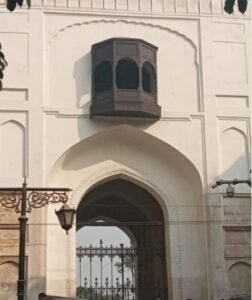
Pictured above: Gor Khatri
Splendours of Peshawar Mohallah Sethian
Deep in the old Walled City, Mohallah Sethian (or the Sethi Residential Complex), is a living monument to Peshawar’s grand past, It is an old residential complex comprising seven houses.Its interconnected homes were built for the Sethi family, one of the leading business dynasties of the subcontinent. Great names such as Haji Ahmad Gul, Khan Bahadur Haji Karim Baksh, and Mian Abdul Karim Sethi, among others, constructed these homes over 200 years ago.
he Sethi dynasty once wielded a vast trading empire, with significant business ties spanning Europe, Central Asia, and Russia. But after the Russian Revolution in 1917 and the fall of Nicholas II, the last czar of Russia, the family faced a devastating financial collapse. Their empire crumbled as heaps upon heaps of Central Asian and Russian currency, painstakingly stacked in basement vaults, lost all value overnight.
Haveli Mian Abdul Karim Sethi
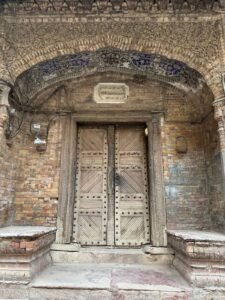
Standing at the entrance of Mohallah Sethian, this Haveli has witnessed more than two centuries of history. It was built by Mian Muhammad Naeem Sethi, grandfather of Mian Abdul Karim Sethi, between 1804 and 1811, (during Durrani Era), making it the ‘first’ Sethi residence in Mohallah Sethian.
Five generations of the family have lived here, and the building has evolved with them. This haveli served as both a family residence and business headquarters.
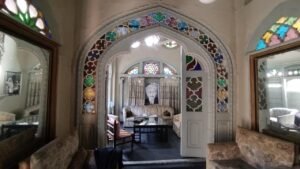
Pictured above: Drawing Room of the Haveli
The family conducted business under the name ‘Muhammad Ismail Abdul Karim Sethi’, which was a reputed business house dealt in International Trade, Peshawar, as it’s headquarters, whereas offices in Mazar-e-Sharif, Kabul, Bukhara, Andkoi, Tashkent. Trade representatives were in Qashirgham, Shanghai, Delhi, Calcutta, and London. The firm dealt in fur, tea, and lambswool.
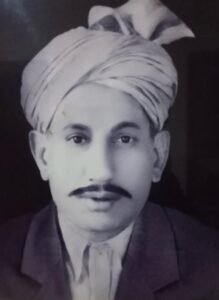
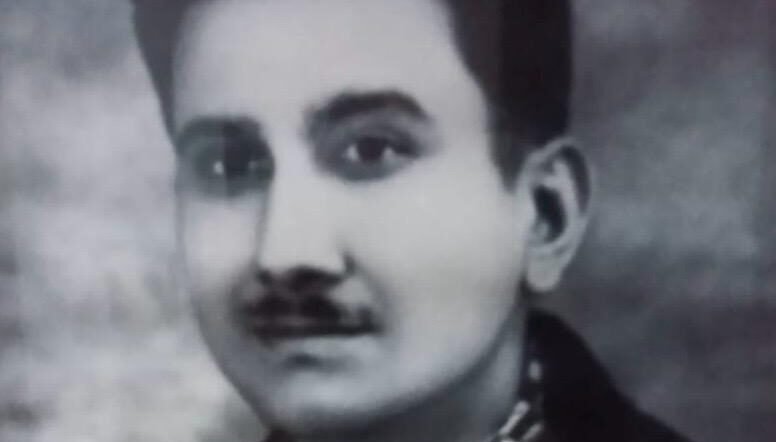
Pictured above: Mian Abdul Karim Sethi
Following the Red Revolution of 1917 in Russia, many business families from the region returned to Peshawar — as the businesses which were conducted in Russian Roubals during Czar’s reign were demonetized. Mian Abdul Karim Sethi also returned to Peshawar in 1924, but the firm quickly adapted by entering into a trade agreement with the new Soviet Government of USSR, utilising a pre-settlement payment mode. Haji Muhammad Ismail Sethi (brother) managed operations from the office in Mazar-e-Sharif.
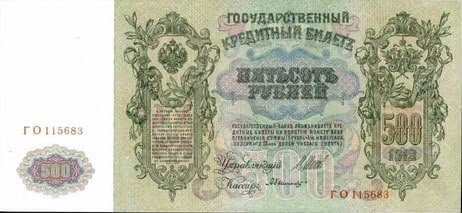
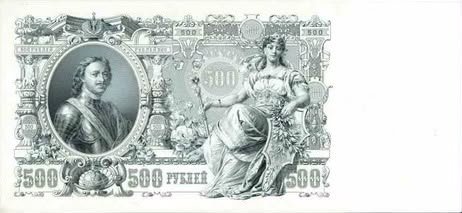
Pictured above: Czar’s Russian Currency
In the year 1928-30, major supplies were made to USSR of fur, lambswool, from Mazar-e-Sharif branch from the border of ‘Tirmiz’ and ‘Kirkee’, duly received and recorded.
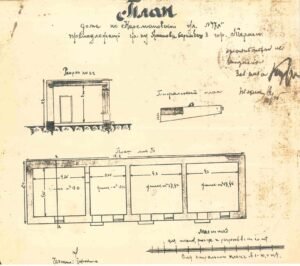
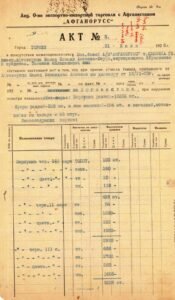
Pictured (from left to right): Property at Termez, Uzbekistan and business ledger.
The family owned mansion and property at:
Patakasare — Bukhara
Poshkinisky oli ssa — Tashkent
Nareman Isky Orissa – Tarmez
were duly registered with that government as per appropriate deeds.
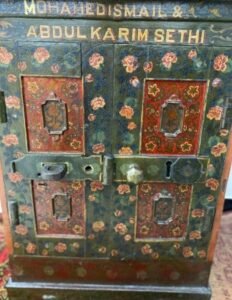
Pictured above: Family Safe
Afghanistan experienced severe political and social upheaval in 1929 when the popular King Amanullah Khan was overthrown by Bacha Saqao, known as “The Bandit King.”
Compounding this instability, the family’s main business partner, the USSR, was also engulfed in The Great Depression, which triggered a global economic downturn from 1930 to 1939. This double crisis of political chaos and economic crisis created an exceptionally challenging environment for the family’s business endeavors.
After peace was restored in Afghanistan, the firm found its payments due from the Russian government trapped in bureaucratic limbo. Haji Muhammad Ismail Sethi made two representations and personally traveled to Tashkent to pursue the matter.
As discussions were underway, World War II erupted, and he was led to believe that the issue would be revisited after the war. Following the conclusion of the conflict, negotiations with the Soviet government resumed.
As the British subcontinent neared its independence and the subsequent creation of Pakistan and India, Haji Muhammad Ismail Sethi passed away in Mazar-e-Sharif. His only surviving family member, his wife, affectionately known as ‘Bi Hajyani,’ returned to Peshawar, marking the closure of the last office in the region.
After Independence in 1947
From 1953 to 1966, the family pursued their claims with the Ministry of Finance and the Ministry of Foreign Affairs of the Government of Pakistan. Following their advice, they also engaged with the Trade Representative of the USSR based in Karachi. However, due to the geopolitical climate of the time, their efforts yielded no significant results. All documents related to the family’s business, properties, and correspondence have been preserved in their original form.
The family patriarch, Mian Abdul Karim Sethi, lived in this haveli until his passing on October 23, 1960, and he is buried in the ancestral graveyard in Peshawar. Here he lived with his wife “Bi Umra” a Central Asian lady of rank from Bokhara and his children and grandchildren.
2001 – 2021: A Period of Two Decades
Since the early 2000s, the haveli inherited and owned by Muhammad Yusuf Sethi’s family, utilized the premises for philanthropic purposes.
An NGO was imparting Quranic education to girl students of the area. There was a medical unit being run with OPD, X-Ray and ultrasound facilities for the needy. It was also an academy to impart girls with computer training, language classes, and vocational training.
The Journey Continues
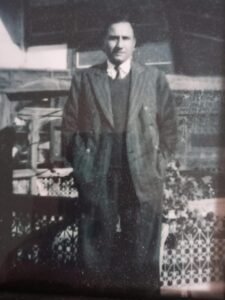
Pictured above: M. Yusuf Sethi
Late Muhammad Yusaf Sethi, the eldest son of Mian Abdul Karim Sethi, was the heart and soul behind the preservation of this haveli. His philanthropic vision for providing free health and education services, along with the recent efforts in partnership with DOAM to transform it into a public-private museum, reflects his enduring legacy.
Today, as we embark on this new chapter, we honor his noble wishes, and commit to carrying forward the values he championed, ensuring that the spirit of the Sethi family continues to enrich the community for generations to come.
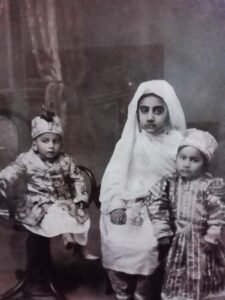
Pictured (from left to right): Muhammad Yusuf Sethi, aged three, cousin Sehr Bibi, and Mehboob Sultan, daughter of Mian Abdul Karim Sethi.
MOU Signing: Private Museum
On May 22, 2024, a significant Memorandum of Understanding was signed between Muhammad Suhail Sethi, owner of the haveli, and Dr. Abdul Samad, Director of the Directorate of Archaeology and Museums KP (DOAM).
The MOU establishes the basic terms and conditions of handing over the Architectural Monument of Haveli Mian Abdul Karim Sethi, by Mr. Muhammad Suhail Sethi, to DOAM. DOAM will jointly manage and administer the archaeological monument with Mr. Suhail Sethi, as a ‘Private Museum’ after its rehabilitation, conservation, illumination and showcasing the history, values, and lifestyle of Sethi family.
DOAM will be responsible for human resources, security, funding, and make its property functional. This is the first public – private museum in Khyber Pakthunkhwa.
Mr. Suhail Sethi, while retaining legal ownership of the property and displayed objects, will collaborate with the Directorate of Archaeology and Museums (DoAM) to recreate the lifestyle of that era. The MOU stipulates, once the restoration is completed by DOAM, Mr. Suhail Sethi will relocate the Holy relics, antiques, chandeliers, and crockery from the czar’s period, along with photographs and documents related to the family business of that time, for public exhibition.